

tagged  return of Jesus, second coming
return of Jesus, second coming Wednesday, January 31, 2024 at 04:26PM  Christians of every generation have been interested in the return of Christ to the earth. And no surprise: the second coming of Christ has been the hope of the church in every age. Using the parable of the bridesmaids Jesus Himself instructed us to “keep awake” and be aware of the signs of the times.
At that time the kingdom of heaven will be like ten virgins who took their lamps and went out to meet the bridegroom. Five of them were foolish and five were wise. The foolish ones took their lamps but did not take any oil with them. The wise, however, took oil in jars along with their lamps. The bridegroom was a long time in coming, and they all became drowsy and fell asleep.
At midnight the cry rang out: “Here’s the bridegroom! Come out to meet him!”
Then all the virgins woke up and trimmed their lamps. The foolish ones said to the wise, “Give us some of your oil; our lamps are going out.”
‘No,’ they replied, ‘there may not be enough for both us and you. Instead, go to those who sell oil and buy some for yourselves.’
But while they were on their way to buy the oil, the bridegroom arrived. The virgins who were ready went in with him to the wedding banquet. And the door was shut.
Later the others also came. ‘Sir! Sir!’ they said. ‘Open the door for us!’
But he replied, ‘I tell you the truth, I don’t know you.’
Therefore keep watch, because you do not know the day or the hour. – Matthew 25: 1-13
In this parable Jesus gives his disciples the assurance of his return and provides instructions for how they should order their lives in light of the promise of his coming. His message was not only for them; it is for us as well. What can we learn from the Lord’s story?
4 Lessons From Parable of the Bridesmaids
From the very opening words of the parable of the bridesmaids we can discover something about the community of faith: we wait together for his return. His coming will certainly involve personal accountability as Jesus returns to judge each person, but until he arrives we are called to remain in community.
It is a fact demonstrated in every century and every culture: Christians flourish in community and wither when they attempt the Christian life on their own. We have a duty to await the bridegroom together.
The young women in this story also carry lanterns. It is a beautiful image of those pure in their faith, filled with expectancy, acting in obedience to the Lord’s command to be the light of the world. Jesus said, “While I am in the world, I am the light of the world” (John 9:5). But he also said to his followers, “You are the light of the world” (Matt. 5:14).
In his absence he wants us to carry God’s light. In a world darkened by sin we are the evidence that a new day is coming. For some people trapped in the darkness of depression or disobedience, we may be the only light they see. And the light we carry is not our own, it comes from the Spirit he has given us.
Jesus spoke of the oil that enabled the lamps to burn. Throughout the Scripture oil is one of the symbols of the Holy Spirit. Jesus promised that He would not leave us alone. While He is away he provides his Holy Spirit to comfort and empower his disciples.
In this parable it is the oil that gives the lanterns their light, and the virgins must trim the lamps. This speaks of our devotion and fervor. We have a responsibility to trim our lamps. No one can do it for us. We alone must be sure that we steward the precious resource of his presence in the Person of the Holy Spirit. The Apostle Paul reminded us that we are the Temple of the Holy Spirit, and instructed those who waited for the Lord’s return, “do not to put out the Spirit’s fire.”
This passage also reminds us that things may take a little longer than we might expect. The bridegroom was a long time coming. He was delayed so long that both the wise and the foolish both fell asleep, but we are still commanded to be ready for his return at any moment.
Ultimately, only the Father knows the day and the hour of the Son’s return. While we recognize along with the Psalmist that our times are in his hands, we also need to recognize that the End Times are most definitely in his hands.
Much has been made of the end of Jesus’ parable of the bridesmaids. When word finally comes that his return is at hand, the foolish virgins must leave to find more oil, and they eventually find themselves on the outside looking in.
This verse can be the source of argument and division, or we can take from it one sure lesson: instead of fearing the words, “I don’t know you,” we can prepare now for the assurance that the door to the feast will be open to us. Do we guard the gift of the Spirit given to us? Do we look eagerly to the day of his coming?
The end of this parable is the beginning of the wedding feast, and Jesus himself has made a way for all to come and dine. The second coming is really the beginning: the beginning of the marriage supper of the Lamb.
Wednesday, July 26, 2023 at 10:59AM  Good pastors lead, but great pastors read (and think, and pray). Wise pastors, the ones who flourish through decades of ministry, set aside time to read, think, and pray. The world is in a rush 24/7. Those Christians who pause each Sunday morning to go to church need a pastor who has taken the time to read, think, and pray; someone who can deliver the good news in with power and insight. That starts with books for pastors capable of deepening our own life in Christ.
The Great Omission, Dallas Willard
Dallas Willard was an ordained Southern Baptist minister, PhD., and professor at the University of Southern California’s School of Philosophy. Perhaps the best introduction to his work is a collection of essays on discipleship, The Great Omission. In The Great Omission Willard points out that following Jesus and teaching others to do the same is the mission of the church. This is accomplished through discipleship:
"Eternal life is the Kingdom Walk, where in seamless unity, we “Do justice, love kindness, and walk carefully with our God.” (Micah 6: 8) We learn to walk this way through apprenticeship to Jesus. His school is always in session. We need to emphasize that the Great Omission from the Great Commission is not obedience to Christ, but discipleship, apprenticeship to him."
Eat This Book, Eugene Peterson
Eugene Peterson is widely known for his scriptural paraphrase, The Message, but his own books are a wealth of wisdom and instruction for pastors. Like Willard’s work, any number of his books for pastors would be an excellent selection, but Eat This Book is an excellent discussion on how to assimilate God’s world into everyday life. It’s a valuable resource for pastors. Here’s a taste:
“Christians don’t simply learn or study or use Scripture; we assimilate it, take it into our lives in such a way that it gets metabolized into acts of love, cups of cold water, missions into all the world, healing and evangelism and justice in Jesus’ name, hands raised in adoration of the Father, feet washed in the company of the Son.”
Prayer, Richard Foster
Ever since publishing Celebration of Discipline in 1978, Foster has been the Godfather of spiritual formation. Over his long and fruitful career, Foster returns again and again to the topic of prayer, so it’s no surprise that Prayer: Finding the Heart’s True Home is among his most useful books for pastors.
“When we pray, genuinely pray, the real condition of our heart is revealed. This is as it should be. This is when God truly begins to work with us. The adventure is just beginning.”
The Reason for God: Belief in an Age of Skepticism, Tim Keller
Tim Keller’s recent passing has brought forth a flowering of appreciation for his patient, steady work as a church-planter and pastor in New York City (of all places!). The Reason for God shows us Keller in his sweet spot, a pastor who was always prepared to give an answer for the hope of his faith. Every pastor who wants to learn how to present faith in Christ as a reasonable way of life can benefit from The Reason for God.
“The Christian Gospel is that I am so flawed that Jesus had to die for me, yet I am so loved and valued that Jesus was glad to die for me. This leads to deep humility and deep confidence at the same time. It undermines both swaggering and sniveling. I cannot feel superior to anyone, and yet I have nothing to prove to anyone. I do not think more of myself nor less of myself. Instead, I think of myself less.”
Surprised by Hope, N.T. Wright
Historian and biblical scholar Tom Wright challenges Evangelicals to ask, “what is the point of salvation?” He addresses the vital question of life-after-death by suggesting that most Christians miss the point of “heaven.” Among the many books for pastors available, Surprised by Hope has the power to re-invigorate preaching and Christian living.
“Jesus's resurrection is the beginning of God's new project not to snatch people away from earth to heaven but to colonize earth with the life of heaven. That, after all, is what the Lord's Prayer is about.”
These excellent books for pastors are merely the beginning. But any pastor who dives into these five has made an excellent investment is a sustained life of prayer, preaching and ministry. Where will you start?
Tuesday, December 13, 2022 at 10:11AM 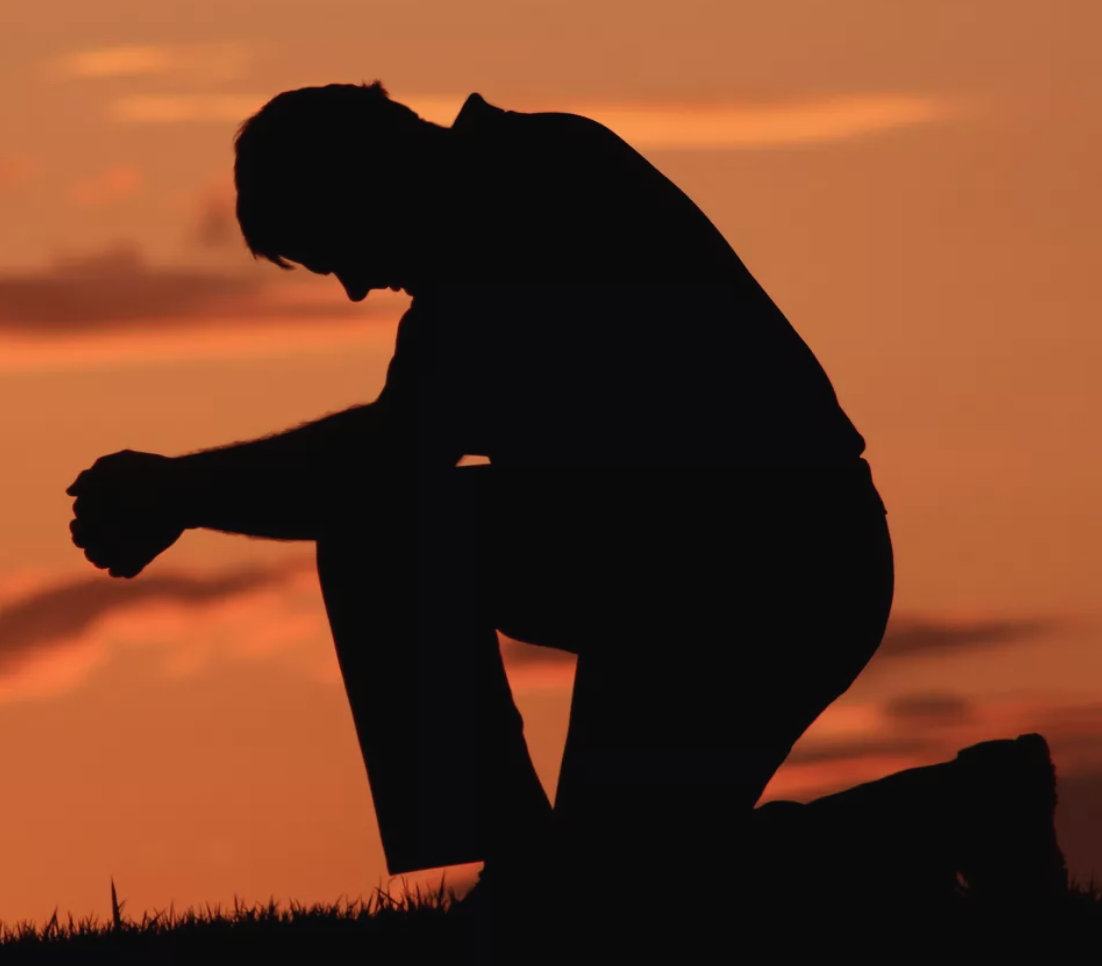 Before I became a pastor no one told me how exhausting preaching can be. It doesn’t make sense: you stand up before the congregation, speak for 30-45 minutes, by Sunday afternoon you’re wiped out physically, mentally, and sometimes spiritually. (And by the way: if you speak longer than that, well, you might want to rethink your preaching.) Some pastors preach multiple services, but still—a relatively low-energy task seems to take an outsized toll on us. This exhaustion is why I’m hesitant to address the topic of what we should do after the sermon. That’s right: our actions after the sermon can have a huge impact on our congregation.
Recently I found myself unable to fall asleep one Sunday night. It had been a good day: church went well; I believe the Holy Spirit helped me to preach well, but something was missing. What had I missed? And then the still small voice I’ve come to know so well said, Pray for your people. I knew immediately that God was directing me to pray for the people of the church. I must admit, even after years of pastoring, once the sermon was delivered I had always felt my work was done. Now God was leading me to a new level of faithfulness after the sermon. Not just a quick summary prayer at the end of the message, but prayer in the nights and days that follow.
Pray for those who heard the word.
Each Sunday there are people who heard, really heard the message. God gave you a message, you studied it out, and your delivered it faithfully. But on Monday and Tuesday, the Word is at risk. In the Parable of the Sower we see that even after the seed is sown (after the sermon, if you will), several things can happen. Luke’s version of the parable is particularly instructive:
The seed is the word of God. Those along the path are the ones who hear, and then the devil comes and takes away the word from there hearts . . .
Whether we are talking about the word along the path, or in the other types of soil, perhaps the pastor's job is to pray over the word after the sermon.
Pray for those who didn't hear the word.
Every pastor understands this. There are some (plenty?) people who don’t hear at all. It turns out that after the sermon is a great time to pray for them, too. If we stay in a pastorate for any length of time we recognize those individuals who seem to have hearts of stone. We might even wonder by they bother coming to church—but they do! And we are their shepherds as well. But every pastor also knows that God is in the business of bringing dead things to life. Why not use the evening after the sermon to lift up?
Pray that you might live into the message.
Finally we, too, are those standing in the need of prayer! One of the great risks of being a “religious professional” is the deception that we do not need God’s grace for growth as well. I’ve heard preachers say (more times than I can count!) something like, “. . . And I’m preaching to myself, here, too . . .” So let’s be real: God used flawed people like you and me to bring his word. Let’s not presume that we will automatically walk out the very word we have delivered. I’ve learned that by praying for myself I am reminded that I am a member of the church as well. I am one who needs grace to hear, repent, grace to repent, and grace to fulfill the very message I’ve brought. How ‘bout you?
I believe these three simple prayer emphases after the sermon can help plant the word deep into the hearts of those we care for—and ourselves.
Friday, May 7, 2021 at 10:27AM  It’s so much easier to study about Jesus than to be a student of Jesus. We face the constant temptation to fill our heads with the details of his life and ministry. Pastors and college professors emphasize the need to memorize Bible verses or learn Greek and Hebrew. Publishers produce massive volumes of systematic theology. Popular Christian books suggest Biblical keys to success for our finances, healing, or any other human need. But Jesus is not a system, he is a person.
Perhaps we should give ourselves first to filling our hearts and lives with his presence. An omniscient God is not impressed with the size of our intellect, but he is impressed with the size of our heart. How can a finite human mind grasp an infinite God? St. Augustine, one of the greatest intellectuals in history, lamented that the “mansion of his heart” was too small and asked God to graciously enlarge his heart, not his mind. The Holy Spirit, who breathed out every word of the scripture, is not impressed with how many verses we have committed to memory, but he is impressed with how many verses have found their way into our everyday lives. Jesus didn't care much for religious knowledge, but he was astonished by the faith of simple people like widows and gentile soldiers.
Even though the Scripture encourages us, “Trust in the Lord with all your heart and lean not on your own understanding,” we are constantly tempted to pursue human understanding regarding the words of Jesus when we should pursue his living presence. Trust is about relationship, understanding is about intellect. In Jesus, God chose to become a man. The infinite stooped down and clothed himself in humanity. In his earthly ministry Jesus did not reveal all the secrets of knowledge and learning in human history. He chose instead to reveal how it was possible to enter into relationship with the creator. Jesus chose to reveal the Kingdom of God. By his actions, Jesus taught relationship is more important than understanding. We know this intuitively. We tend to forget it when it comes to our faith.
Faith does not require us to throw our brains into the trash. It does, however, require us to order our lives around what is most important, and relationship comes first. Jesus opened the way back to relationship with the creator. The good news of the gospel is that the Father has gone after the very children who have rejected him. He refuses to leave us alone. He will pay any price--even the life of son--in order to win us back again. That's a committed relationship in action.
Some of us have busied ourselves with developing human descriptions of God’s action. We discuss words like justification or sanctification. We try to present the legal reasons Christians can expect to go to heaven when they die. When Jesus paid the price for reconciliation, he wasn’t thinking about theology: he demonstrated God’s irrepressible love. Jesus described eternal life in terms of relationship with God: “Now this is eternal life: that they may know you, the only true God, and Jesus Christ, whom you have sent.” (John 17:3)
In Jesus are "hidden all the treasures of wisdom and knowledge." (Colossians 2:3) We are commanded to love the Lord our God with all our hearts, mind, and strength, so we can confidently apply our intellect in the love of God. We should also remember that the countless of number of people from every tribe, tongue, and nation who will worship him in heaven will certainly include the unlearned and the illiterate--and they may have a thing or two to teach us about a loving relationship with Jesus.
The challenge for us as Students of Jesus, then, is to know him, and not settle for knowing about him.
Saturday, January 30, 2021 at 04:08PM  I thought other people needed this book. In the act of researching, thinking, and praying I discovered I needed this book. Imagine setting out to write a book only to discover you knew absolutely nothing about the topic, or worse still: you had not lived a life remotely resembling that topic. This is why it’s taken three years to produce a remarkably thin volume.
This book is about living deeply into a lifestyle of repentance—a subject not discussed much in my faith neighborhood. Each “chapter” is short. I had a rhythm in mind: read, then meditate; study, then understand; practice again and again.
I owe thanks a cadre of friends who have encouraged me again and again in this (and all), my pretensions toward the writing life. They are each astoundingly creative in their own vineyards, and have condescended to allow me be their fellow traveler. Collectively, I think of them as the gang at the Eagle and Child Pub.
Finally, I’m so very grateful to Kim Hollenbach, my long-suffering wife, who has lived 30+ years with a husband who knows little to nothing about repentance as a daily practice: imagine the burden! She also volunteered to proof read the book, and did so under an unreasonably short deadline.
This book is available at Amazon, paperback or Kindle.